
Mount Vesuvius
20 km
This volcano is the geological reason for the preservation of Pompeii and offers a direct historical connection to the site.

Rome sits roughly 240 kilometres north of Vesuvius, and the rail line between them is one of the fastest in Europe — but no train runs door to door. This how long is the train ride from rome to pompeii guide sets out the two legs, the change point, and the realistic total. It also explains why the number on a timetable rarely matches the number on your watch.
Quick answer
Allow roughly two and a half hours in total. High-speed services cover Roma Termini to Napoli Centrale in about 70 minutes, after which a regional connection reaches Pompeii in a further 35 to 40 minutes. Add 20 to 30 minutes for the change and the platform walk. The site sits at Via Villa dei Misteri, 2, and opens at 09:00 daily.
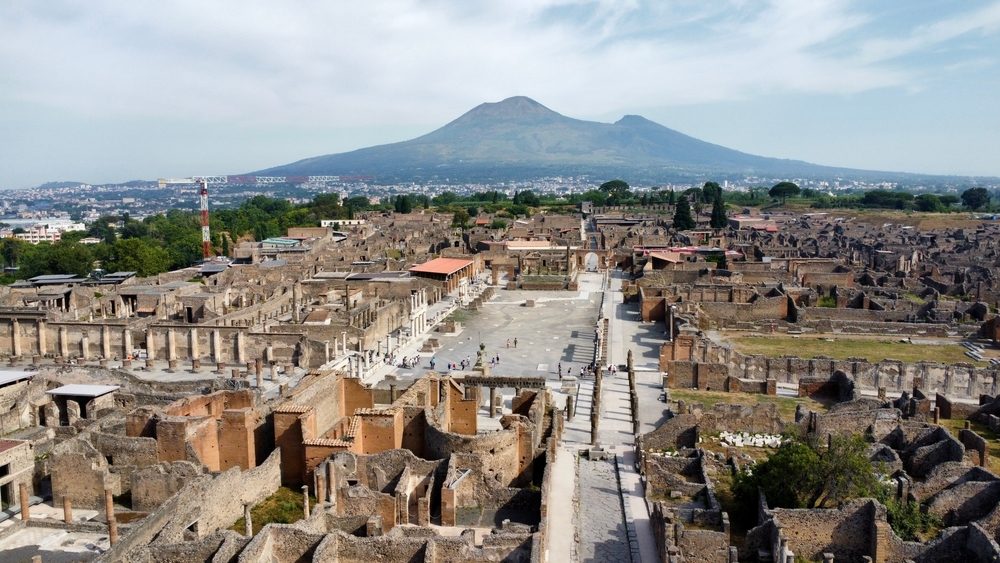
Pompeii was buried by Vesuvius in AD 79 and lay largely undisturbed until systematic excavation began in 1748 — meaning the modern rail network arrived at a town that had been unreachable for sixteen centuries. Today the archaeological park is one of the most accessible ancient sites in Italy, yet the question of how long is the train ride from rome to pompeii still confuses first-time visitors, because there is no single through service. The route splits in two at Naples. The first leg is straightforward. Frecciarossa and Italo services run frequently between Roma Termini and Napoli Centrale, and this is where most of the distance disappears. The second leg is the one travellers underestimate: a shorter regional hop along the Bay of Naples toward the ruins, threading past Ercolano and the lower slopes of Vesuvius. Two stations serve the site, and they are not interchangeable — one sits beside the Porta Marina entrance and the Villa dei Misteri, the other closer to the modern town and the Sanctuary of Pompeii. Choosing the wrong one adds a walk, not a disaster, but it matters when the day is tight. Context explains the confusion. Search results for a treno da Roma a Pompei often quote only the high-speed segment, which flatters the total. A Rome to Pompeii train journey is really a chain of connections, and chains have slack in them: platform changes, ticket validation, the queue at the turnstile. Anyone building a wider Pompeii and Amalfi Coast itinerary — where Sorrento, Positano and the coast road follow the ruins — should treat the rail time as a fixed cost around which everything else bends. What to do with the answer is simple. Work backwards from the site's 09:00 opening rather than forwards from breakfast, because the Forum, the Stabian Baths and the House of the Faun reward the cooler early hours. Reserve the high-speed leg in advance; the regional connection does not require it. Understanding how long is the train ride from rome to pompeii is less about shaving minutes than about knowing which hours of the day you are actually buying.
“A Rome to Pompeii train journey is really a chain of connections, and chains have slack in them.”
The journey from Rome to Pompeii requires a two-stage rail connection. You first travel from Rome to Naples before transferring to a local train line to reach the archaeological site.
Frecciarossa or Italo from Roma Termini to Napoli Centrale
Circumvesuviana line from Napoli Piazza Garibaldi to Pompei Scavi-Villa dei Misteri
Walk from Pompei Scavi station to the park entrance
The station at Pompei Scavi-Villa dei Misteri is located directly across from the main entrance of the archaeological site at Via Villa dei Misteri, 2.
This plan suits independent travellers doing Pompeii as a full day from Rome, with an optional afternoon extension toward the Amalfi Coast. Budget roughly twelve hours door to door, of which about five are spent on site and in transit between stops.
Head to Roma Termini for the early southbound departure, allowing fifteen minutes to collect tickets and find the platform. Eat breakfast on board rather than queuing at the station bar.
Arrive at the Via Villa dei Misteri entrance and clear security. Bags larger than a small daypack go in the free cloakroom, which adds ten minutes at busy times.
Walk uphill through Porta Marina to the Forum, the Basilica and the Temple of Apollo. Allow an hour; the open ground here has almost no shade, so do it first.
Cross to the Teatro Grande, Odeion and the Stabian Baths. Around ninety minutes, with the Via dell'Abbondanza as your spine for navigating back.
See the Vettii frescoes and the House of the Faun, then pause at the on-site cafeteria near the Forum. Refill water bottles at the drinking fountains along the main streets.
Follow Via Consolare out past the Porta Ercolano tombs to the villa's fresco cycle. It is a ten-minute walk each way and is not covered by every ticket type.
Return to the Villa dei Misteri station for onward transfer to Sorrento or Positano, or begin the journey back to Rome. Confirm your return departure before leaving the site.
The best arrival window is 09:00–10:30. Arriving early helps avoid peak crowds and heat during the middle of the day.
Pleasant; 15°C to 22°C. Mild temperatures are ideal for walking the site.
Hot and humid; 25°C to 30°C. High heat requires extra hydration and shade.
Warm; 20°C to 26°C. Favorable conditions for outdoor exploration without extreme heat.
Cool; 8°C to 15°C. Fewer visitors allow for more space throughout the archaeological site.
Verdict: Tuesday to Thursday, arriving at 09:00, in April or October provides the most temperate and accessible experience.
The archaeological site of Pompeii operates on a consistent daily schedule throughout the week. Visitors planning their train travel from Rome should note these standard hours for site access.
Visitors often combine a trip to the archaeological site with nearby coastal towns or historical landmarks to maximize their time in the Campania region. These locations offer logical extensions for those looking to experience the broader geography surrounding the ancient city.
20 km
This volcano is the geological reason for the preservation of Pompeii and offers a direct historical connection to the site.
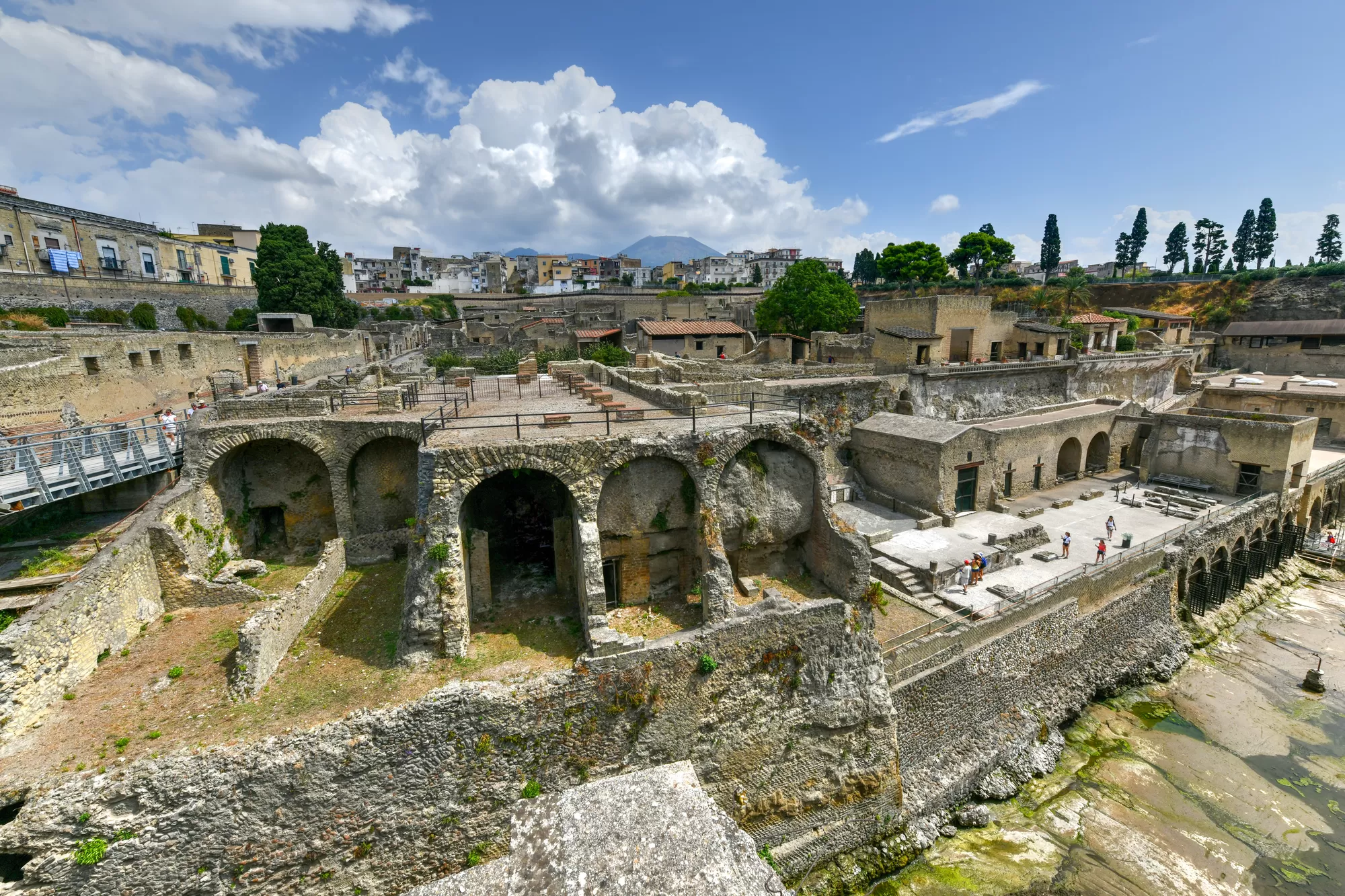
18 km
Like Pompeii, this town was buried by the 79 AD eruption but offers a different perspective with better-preserved organic materials.

35 km
Located on the Amalfi Coast, this town is frequently visited by travelers who wish to contrast the ancient ruins with the southern coastal landscape.
A few preparations made in advance keep a long Rome-to-Pompeii day running smoothly from departure to the last train back.
Everything you need to know about how long is the train ride from rome to pompeii
The travel duration varies depending on your chosen connection, with high-speed options combined with local transfers taking around 2 hours. While most journeys require a transfer in Naples, you should plan for a total transit time of at least 2 to 3 hours to be safe. It is important to know how long is the train ride from rome to pompeii to effectively schedule your day. Always check live schedules as journey times can fluctuate based on transfer waiting periods.
While most connections require a transfer at Napoli Centrale, there are limited direct high-speed services available on certain days. Most travelers take a high-speed train to Naples and switch to the local Circumvesuviana line. Regardless of the route, understanding how long is the train ride from rome to pompeii helps you coordinate your transfers. Direct options are rarer and often tied to specific seasonal schedules.
The fastest approach is taking a Frecciarossa or Italo high-speed train from Roma Termini to Naples, followed by a quick local connection. This method minimizes time spent in transit compared to bus or standard rail options. When planning your logistics, consider how long is the train ride from rome to pompeii using these high-speed links to maximize your time at the site. This combination is widely considered the most efficient for visitors.
Yes, Pompeii is frequently included as a major stop on an Amalfi Coast day trip due to its convenient location along the route. By leveraging high-speed rail, you can balance your time between the ancient ruins and the coastal views. Visitors often enjoy the flexibility that organized transport provides for these combined itineraries. Planning your morning departure carefully is essential for a successful day trip.
Booking high-speed rail tickets in advance is highly recommended to secure better prices and preferred departure times. Local trains like the Circumvesuviana do not require advance booking and function like a commuter service. You can purchase these tickets at the station upon arrival in Naples. Flexibility with local transfers allows you to adapt to your specific arrival time.
The best arrival window for visiting the archaeological site is between 09:00 and 10:30. Arriving early helps avoid peak crowds and heat during the middle of the day. This schedule ensures you have ample time to explore the vast ruins before the afternoon rush. Proper planning for your morning transit will make your visit more enjoyable.
The primary stop for the ruins is the Pompei Scavi - Villa dei Misteri station, which is located just a short walk from the entrance. Once you disembark, you will find clear signage directing you to the site. The address is Via Villa dei Misteri, 2, 80045 Pompeii, which is highly accessible for those arriving by rail. Following these signs makes the final leg of your journey very straightforward.